

 français
 English
 Deutsch
 español
 العربية
 中文
中文
L'électricité fait partie intégrante de notre quotidien. Elle alimente les usines, les écoles, les hôpitaux, les centres commerciaux et les habitations. Aujourd'hui, de nombreux appareils, tels que les ordinateurs, les chargeurs, les ascenseurs, les systèmes solaires et les véhicules électriques, utilisent une électronique de pointe. Si ces appareils sont utiles, ils peuvent aussi rendre le réseau électrique plus complexe et plus difficile à contrôler.
C'est ici que
Filtres harmoniques actifs
, ou
Les AHF entrent en jeu. Elles contribuent à purifier l'électricité et à assurer le bon fonctionnement des réseaux électriques. Dans cet article, nous expliquerons en termes simples ce qu'est une AHF, ses principaux types et son fonctionnement.
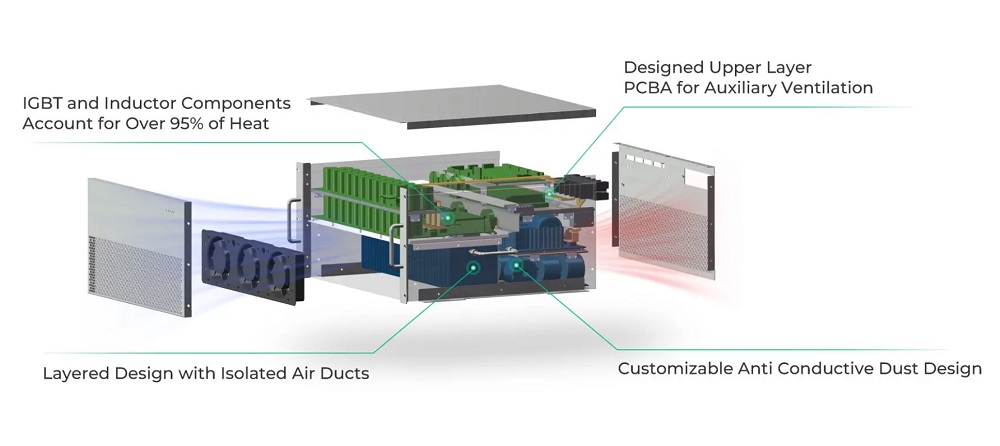
Un filtre harmonique actif est un dispositif électrique intelligent qui purifie l'électricité sale.
Certaines machines ne consomment pas l'électricité de manière optimale. Elles génèrent des signaux indésirables appelés harmoniques. Ces harmoniques peuvent provoquer un échauffement des câbles, endommager les équipements, gaspiller de l'énergie et entraîner des dysfonctionnements des systèmes.
Un dispositif de filtrage actif (AHF) surveille en permanence le réseau électrique. Lorsqu'il détecte des harmoniques, il émet instantanément un signal opposé pour les annuler. Cette opération s'effectue en temps réel, garantissant ainsi un réseau électrique propre et stable.
Ces lampes fluorescentes compactes sont faciles à installer. Elles sont fréquemment utilisées dans les bureaux, les écoles, les hôpitaux et les petites usines. Elles sont particulièrement adaptées aux espaces restreints et aux installations électriques de faible puissance.
Les grands générateurs de courant alternatif (GCA) sont installés dans des armoires et peuvent gérer une puissance bien supérieure. Ils sont souvent composés de plusieurs unités plus petites fonctionnant ensemble. On les utilise dans les grandes usines, les mines, les ports et les centrales électriques où les problèmes d'alimentation électrique sont plus critiques.
Ce type de traitement vise uniquement à éliminer les harmoniques. Il est utilisé lorsque le problème principal est la pollution électrique et que le réseau électrique est par ailleurs stable.
Certains filtres passe-bas automatiques (FPA) peuvent remplir plusieurs fonctions. Ils éliminent non seulement les harmoniques, mais contribuent également à une meilleure efficacité énergétique du système. Cela permet de réduire le gaspillage d'énergie et les factures d'électricité.
C'est le type le plus répandu. Il se branche à proximité de la charge, et non directement sur le circuit électrique. Cela le rend sûr, facile à installer et simple à étendre ultérieurement.
Dans les très grands systèmes, les filtres AHF sont parfois utilisés conjointement avec des filtres traditionnels. Le filtre traditionnel traite les problèmes simples, tandis que le filtre AHF gère les problèmes complexes et évolutifs.
La fonction principale d'un filtre actif de fréquence (AHF) est d'éliminer les courants harmoniques. Cela permet de lisser la forme d'onde du courant électrique et de respecter les normes de qualité de l'énergie.
Les AHF réagissent en quelques millisecondes seulement. C'est important dans les endroits où les machines s'allument et s'éteignent fréquemment, comme les usines équipées de grues, de machines à souder ou d'ascenseurs.
L'électricité sale peut provoquer une surchauffe ou une panne prématurée des équipements. En purifiant le courant, les filtres AHF contribuent à prolonger la durée de vie des machines et à améliorer leur fiabilité.
Certains régulateurs de fréquence (AHF) permettent au système d'utiliser l'électricité plus efficacement. Cela réduit les pertes d'énergie et contribue à réaliser des économies à long terme.
Les harmoniques peuvent provoquer des alarmes, des déclenchements intempestifs et des problèmes de communication. Les filtres passe-bande réduisent ces problèmes et contribuent à un meilleur fonctionnement des réseaux électriques.
Les systèmes AHF modernes sont dotés de commandes intelligentes et d'écrans affichant le fonctionnement du système. De nombreux systèmes AHF sont modulaires, permettant ainsi aux utilisateurs d'ajouter ultérieurement des unités supplémentaires en cas de besoin de puissance accrue.
Les filtres traditionnels sont fixes et lents. Ils ne fonctionnent correctement que dans certaines conditions et peuvent parfois engendrer de nouveaux problèmes.
Les AHF sont différents. Intelligents, flexibles et sûrs, ils s'adaptent automatiquement aux variations de charge et ne provoquent pas de problèmes de résonance. De plus, leur absence de pièces mobiles réduit considérablement leur entretien.
Les AHF sont utilisés dans de nombreux endroits, tels que :
Usines et chaînes de production
centres commerciaux et immeubles de bureaux
centres de données et hôpitaux
systèmes d'énergie solaire et éolienne
Postes de transformation électrique et réseaux de distribution d'électricité
Dans tous ces endroits, les AHF contribuent à maintenir une électricité propre et fiable.
Les filtres harmoniques actifs sont comme des « nettoyeurs » pour l’électricité. Ils éliminent les signaux indésirables, protègent les équipements et améliorent le fonctionnement des réseaux électriques.
Avec le développement technologique et la multiplication des appareils électroniques, l'électricité propre devient plus importante que jamais. Les AHF constituent une solution intelligente et moderne qui contribue à garantir la sécurité, l'efficacité et la pérennité des réseaux électriques.



 réseau ipv6 pris en charge