
 français
 English
 Deutsch
 español
 العربية
 中文
中文
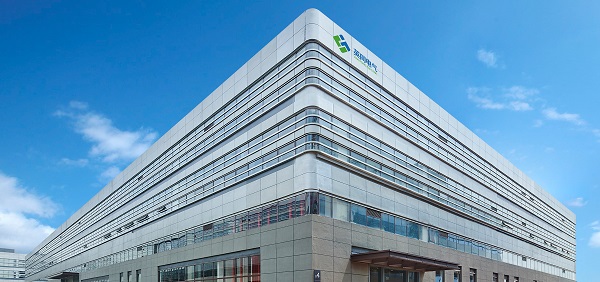
Cas d'application d'APF et de SVG dans le centre de données de Guizhou Telecom
1. Contexte du projet
Dans l'économie numérique actuelle en constante évolution, les centres de données constituent le socle numérique qui gère des fonctions essentielles telles que la puissance de calcul, le stockage des données et les opérations commerciales. Leur fonctionnement stable, efficace et respectueux de l'environnement a un impact direct sur la continuité des activités des entreprises et leur compétitivité sur le marché. En tant qu'infrastructure centrale du nœud national du projet « Données Est Ouest Informatique », le centre de données de Guizhou Telecom a connu une expansion considérable depuis le début de sa construction en 2013, passant de six à quinze salles de machines. Avec un investissement total prévu de plus d'un milliard de yuans et une superficie de 300 000 mètres carrés, le centre exploite actuellement 15 bâtiments abritant 14 000 baies et 120 000 serveurs. Il est devenu le nœud de puissance de calcul national le plus important et le plus dynamique du sud de la Chine. Cependant, face à l'explosion des besoins en calcul d'intelligence artificielle, les expansions et mises à niveau continues ont entraîné une augmentation de la capacité des baies, se traduisant par une forte hausse du nombre de serveurs haute densité, de systèmes de refroidissement liquide, d'alimentations sans coupure et de climatiseurs à fréquence variable. Ces charges non linéaires ont progressivement provoqué une série de problèmes de qualité de l'énergie après leur mise en service, affectant gravement l'efficacité opérationnelle et la sécurité de l'entreprise, ce qui a nécessité des mesures de gouvernance complètes.
II. Risques liés aux problèmes de qualité de l'énergie
III. Solutions
Afin de relever les principaux défis du centre de données de Guizhou Telecom – caractérisé par une forte densité, une charge élevée, une grande fiabilité et un fonctionnement respectueux de l'environnement – et de prendre en compte les spécificités des systèmes de refroidissement liquide et des équipements de calcul intelligents, une étude approfondie sur site, une analyse des données de charge et une comparaison de plusieurs solutions ont été réalisées. Le choix s'est porté sur une solution de gouvernance collaborative combinant un filtre actif de puissance (APF) et un générateur statique de puissance réactive (SVG). Cette approche permet une double optimisation de la réduction des harmoniques et de la compensation de la puissance réactive, garantissant stabilité, efficacité énergétique et évolutivité, tout en répondant aux besoins de développement durable et d'expansion de la capacité de calcul du centre. La stratégie de déploiement de cette solution est la suivante :
Ce projet de rénovation remplace le système de compensation de puissance réactive existant, basé sur des condensateurs, par des équipements APF et SVG. Comparé à la compensation par condensateurs traditionnelle, le nouveau système offre un rendement supérieur, une réponse plus rapide, une taille compacte et une durée de vie plus longue. Il répond parfaitement aux exigences du centre de données de Guizhou Telecom en matière d'espace réduit, de haute fiabilité et d'efficacité énergétique, tout en étant compatible avec les caractéristiques de fonctionnement des systèmes de refroidissement liquide.
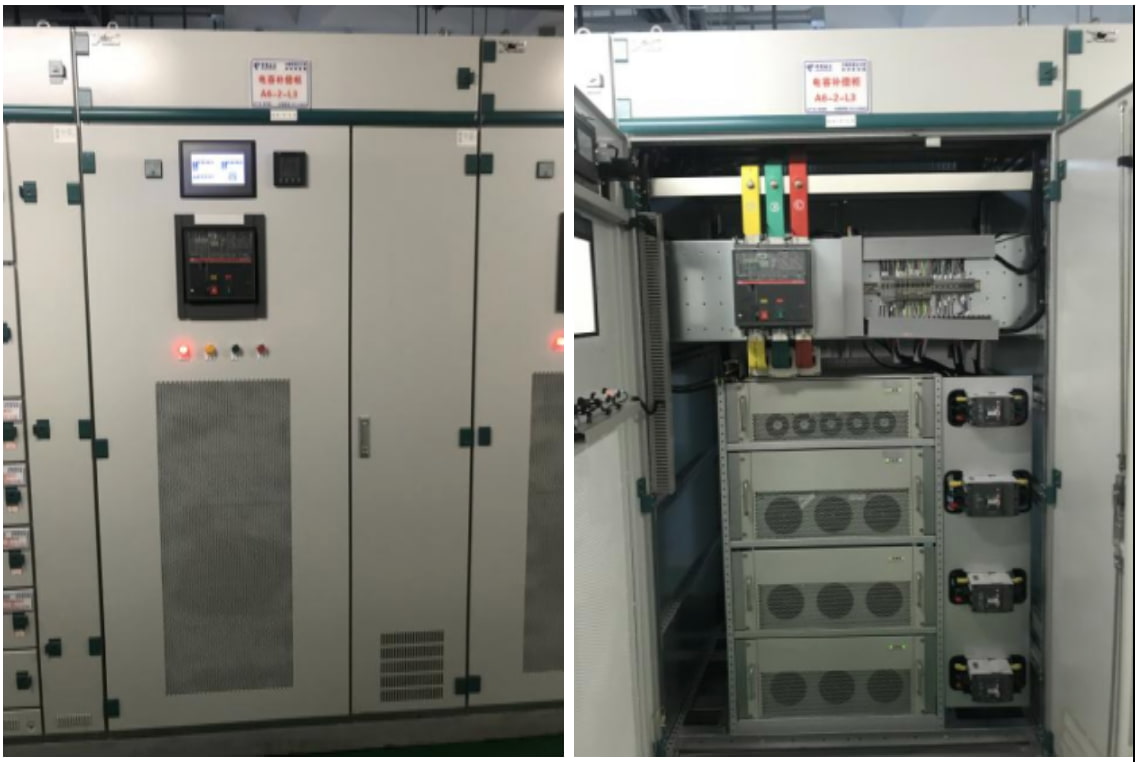
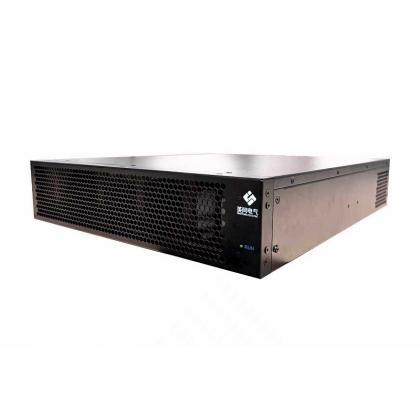
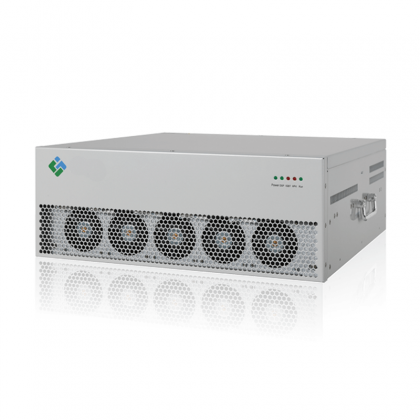
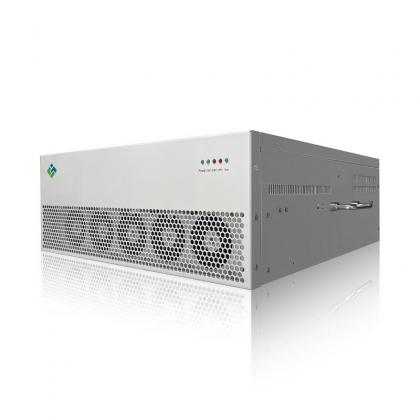
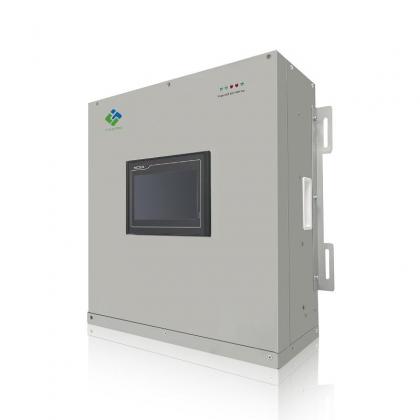
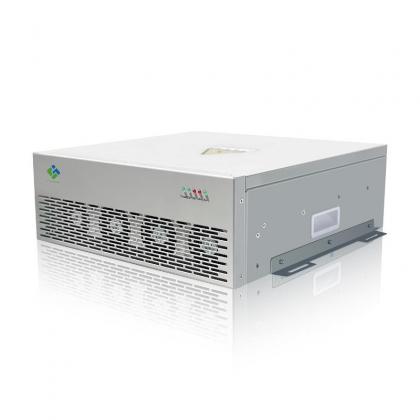
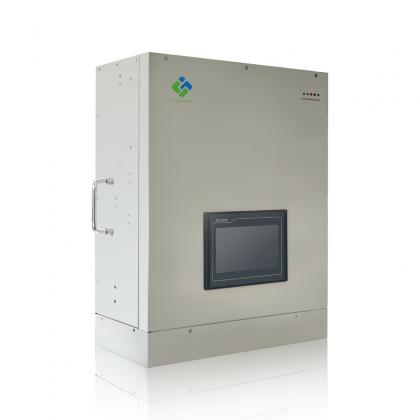
Filtre actif de puissance (APF) Déployé avec 10 unités APF modulaires offrant une capacité de compensation totale de 4 000 A, ce système, doté d'une technologie anti-résonance à couplage intelligent et d'une conception brevetée de dissipation thermique, atteint une efficacité de filtrage de 99 % avec un temps de réponse inférieur à 5 ms. Il capture et élimine avec précision les harmoniques de rang 2 à 51, en ciblant particulièrement l'accumulation de la 3e harmonique sur la ligne neutre, pour une atténuation efficace et une prévention optimale des risques d'incendie. Compatible avec la surveillance à distance 4G/WiFi, il s'intègre à la plateforme centrale intelligente d'exploitation et de maintenance, permettant la visualisation en temps réel des données harmoniques pour une gestion intuitive via écran tactile, répondant ainsi aux exigences d'exploitation sans personnel du centre.
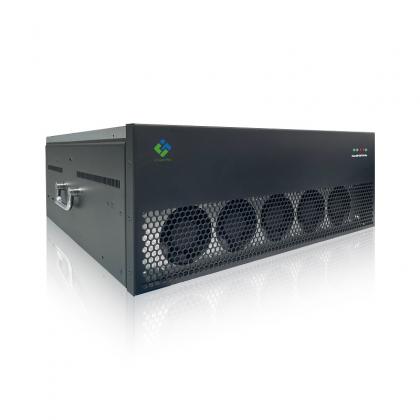
Générateur statique de puissance réactive (SVG) Le système comprend 10 unités SVG modulaires offrant une capacité de compensation totale de 3 000 kvar. Grâce à l'utilisation de modules de puissance IGBT et d'une technologie de contrôle instantané de la puissance réactive, il atteint un temps de réponse inférieur à 5 ms pour une compensation dynamique continue de la puissance réactive, maintenant ainsi un facteur de puissance supérieur à 0,99. Le système assure également la compensation des déséquilibres triphasés, s'adaptant avec flexibilité aux variations de charge transitoires des centres de données. Il est particulièrement efficace pour atténuer les surtensions de puissance réactive lors du démarrage des clusters de serveurs d'IA et de l'activation des systèmes de refroidissement liquide. Même en mode d'alimentation par générateur, il garantit une performance de compensation stable, assurant ainsi une alimentation électrique fiable et stable.
En intégrant l'architecture de distribution électrique et l'agencement du centre de données de Guizhou Telecom, nous mettons en œuvre un modèle de déploiement de « gestion centralisée et compensation par zones ». Cette approche, adaptée aux caractéristiques de charge des salles informatiques intelligentes et refroidies par liquide, garantit une couverture complète et une gestion efficace sans faille.
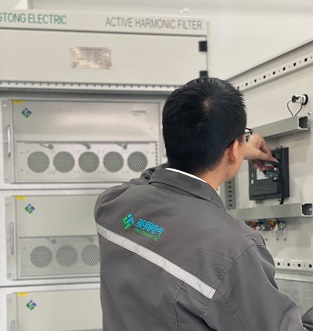
Au niveau du point d'entrée principal du réseau de distribution basse tension, des filtres actifs (APF) et des convertisseurs de puissance réactive (SVG) sont déployés de manière centralisée afin de traiter la pollution harmonique et les pertes de puissance réactive dans l'ensemble du centre de données. Ceci garantit la conformité aux normes de qualité de l'énergie au point de raccordement public (PCC), assurant ainsi une alimentation électrique stable.
Dans les zones à forte charge, comme les salles serveurs à refroidissement liquide et les centres de calcul intelligent, déployez de petits modules APF par zones pour gérer les charges harmoniques élevées localisées (par exemple, les groupes d'onduleurs, les systèmes de refroidissement liquide et les alimentations à découpage haute fréquence). Cela empêche l'accumulation d'harmoniques et protège les équipements critiques.
Tous les équipements sont intégrés à la plateforme intelligente d'exploitation et de maintenance du centre de données, permettant un contrôle coordonné des APF et des SVG, une surveillance des données en temps réel, des alertes de panne et une maintenance à distance. Cette intégration transparente avec le système d'exploitation et de maintenance existant réduit les coûts opérationnels et s'inscrit dans la tendance à la maintenance automatisée.
Comparée à l'approche traditionnelle de compensation par filtre LC + SVC, la solution collaborative APF-SVG offre trois avantages clés, répondant parfaitement aux exigences de haute densité, de haute fiabilité et d'écologie du centre de données de Guizhou Telecom.
Hautement intelligent : assure un suivi dynamique de la charge et un ajustement automatique des paramètres de compensation sans intervention manuelle. Il s’adapte aux fortes fluctuations de charge des centres de données et aux caractéristiques de fonctionnement des systèmes de refroidissement liquide et des dispositifs informatiques intelligents, évitant ainsi la surcompensation et la sous-compensation pour garantir une alimentation électrique stable.
Robustesse accrue : L’APF utilise une architecture parallèle multimodule, où les défaillances de modules individuels n’affectent pas les performances globales du système. Le SVG intègre une protection complète contre les surtensions, les surintensités et la surchauffe, avec un temps moyen entre pannes (MTBF) pouvant atteindre 80 000 heures et une durée de vie nominale de 10 ans, répondant ainsi parfaitement aux exigences d’un fonctionnement continu et stable.
Excellente évolutivité : La conception modulaire permet une extension de capacité en ligne avec une capacité de compensation réservée de 20 %, répondant ainsi aux besoins futurs d’extension de 5 000 racks et de mise à niveau de la puissance de calcul dans les centres de données. Ceci élimine la nécessité de reconstruire les systèmes de distribution électrique, réduit les coûts de mise à niveau et améliore en continu la capacité du centre pour soutenir l’initiative « Données Est Ouest Computing ».
IV. Résultats de l'application
Après la mise en œuvre de la solution de gouvernance collaborative APF-SVG, douze mois d'exploitation continue et de surveillance des données ont démontré que tous les indicateurs de qualité de l'énergie étaient conformes aux normes nationales. Ceci a permis de résoudre les principaux défis du projet lors de sa phase initiale, avec des améliorations multidimensionnelles en matière de stabilité, d'efficacité énergétique, de conformité et de maintenance opérationnelle. La solution s'inscrit parfaitement dans les objectifs de développement écologique, intelligent et évolutif du centre de données de Guizhou Telecom, et génère une valeur économique et sociale significative. Principaux résultats :
L'équipement APF filtre efficacement les harmoniques, maintenant le taux de distorsion harmonique (THDi) du réseau électrique en dessous de 3,2 %, bien en deçà de la norme nationale de 5 %. Parallèlement, le SVG compense précisément la puissance réactive, portant le facteur de puissance à plus de 0,98 et éliminant totalement la distorsion et le scintillement de la tension. Depuis son déploiement, le cluster de serveurs, le système de refroidissement liquide et les équipements de calcul intelligent n'ont subi aucune interruption de service due à des problèmes de qualité de l'alimentation électrique. Le taux d'interruption de service est tombé à zéro et le taux de défaillance des équipements a chuté de 70 %. Ceci a permis d'assurer la stabilité des services essentiels, notamment la capacité de calcul de l'Est, les services des collectivités locales et les services cloud d'entreprise, améliorant ainsi considérablement la satisfaction des clients. En évitant les pertes économiques et les risques d'image liés aux interruptions de service, le centre a consolidé sa position de nœud de calcul national.

Le système a permis de réduire les pertes en ligne de 14,5 %, de diminuer les pertes de puissance réactive de 90 % et de réaliser une économie de 1,7 million de yuans sur les coûts annuels d'électricité, avec un retour sur investissement en 8,5 mois. La réduction de la production de chaleur des équipements et de la charge du système de refroidissement a optimisé le PUE du centre, le faisant passer de 1,2 à 1,15 et réduisant ainsi la consommation annuelle d'énergie de plus de 900 000 kWh. Ces améliorations soutiennent la stratégie « double carbone » et renforcent la compétitivité du pôle de calcul vert. Par ailleurs, l'allongement de 30 % de la durée de vie des équipements et les économies annuelles de 750 000 yuans sur les coûts d'exploitation et de maintenance, conjugués à une efficacité opérationnelle accrue, ont considérablement allégé les charges d'exploitation et amélioré la rentabilité du centre.
Tous les indicateurs de qualité de l'énergie sont pleinement conformes à la norme nationale actualisée « Qualité de l'énergie – Harmoniques dans les réseaux électriques publics », évitant ainsi les risques de redressement et de pénalités lors de l'inspection spécialisée du gestionnaire de réseau. La conception modulaire, avec sa capacité de redondance, permet d'intégrer facilement les 5 000 racks nécessaires à l'extension du centre de données sans investissement supplémentaire substantiel dans la reconstruction du réseau de distribution électrique. Ceci garantit une alimentation électrique fiable pour renforcer les capacités de calcul intelligent et la puissance du projet « Données Est Ouest », permettant ainsi au centre de réaliser des progrès constants en matière de puissance de calcul.
En s'intégrant à la plateforme intelligente d'exploitation et de maintenance existante du centre d'accès, le système permet la surveillance à distance, les alertes de panne et le réglage des paramètres des dispositifs APF et SVG. Ceci élimine le besoin de personnel sur site, permettant à un seul opérateur de gérer plusieurs tâches et réduisant les coûts de main-d'œuvre de 40 %. La conception modulaire de l'équipement permet le remplacement à chaud, simplifiant les processus de maintenance et de remplacement. Ceci améliore encore l'efficacité opérationnelle, réduit la charge de travail de maintenance et, en synergie avec le système intelligent d'exploitation et de maintenance du centre, optimise les performances globales.
V. Résumé du cas et valeur de la promotion
Cette étude de cas, centrée sur le centre de données de Guizhou Telecom, démontre que l'application intégrée d'un filtre actif de puissance (APF) et d'un générateur statique de puissance réactive (SVG) constitue la solution optimale pour résoudre les problèmes de qualité de l'énergie dans les centres de données écologiques à haute densité, forte charge et haute fiabilité, notamment la pollution harmonique et les pertes de puissance réactive. Elle est particulièrement adaptée aux scénarios tels que les centres de données, les centres de calcul intelligents et les centres de données à refroidissement liquide prenant en charge le nœud central « Données Est Ouest Calcul ». Comparée aux solutions traditionnelles, cette approche permet non seulement une gestion précise de la qualité de l'énergie, mais crée également une valeur économique durable pour les centres de données grâce aux économies d'énergie, à l'allongement de la durée de vie des équipements et à l'amélioration de l'efficacité opérationnelle. De plus, elle soutient le développement de centres de données écologiques et s'inscrit dans la stratégie « Double Carbone », correspondant parfaitement au positionnement stratégique du centre de données de Guizhou Telecom.
En tant que référence pour la construction de centres de données et composante essentielle de l'initiative « Données Est Ouest Informatique », le centre de données de Guizhou Telecom a établi des bonnes pratiques reproductibles et évolutives pour la gestion de la qualité de l'énergie dans les centres de données à grande échelle, les plateformes de cloud computing, les centres de calcul intelligent et les installations de reprise après sinistre à l'échelle nationale. Avec l'approfondissement de cette initiative et l'explosion des besoins en calcul d'IA, les centres de données doivent désormais respecter des normes de qualité de l'énergie toujours plus strictes. Les systèmes APF (filtre actif de puissance) et SVG (générateur statique de puissance réactive) sont passés d'équipements optionnels à des protections indispensables. Qu'il s'agisse de la planification de nouveaux centres de données ou de la mise à niveau d'installations existantes, la solution de gouvernance intégrée APF-SVG répond précisément aux besoins opérationnels, garantissant une infrastructure électrique stable pour un développement de l'économie numérique de haute qualité, tout en assurant la fiabilité de chaque ressource informatique.



 réseau ipv6 pris en charge