
 français
 English
 Deutsch
 español
 العربية
 中文
中文

I. Contexte du projet
Avec les objectifs de la Chine en matière de « double carbone », le secteur de la production d'énergie photovoltaïque bénéficie de nouvelles opportunités de croissance et de perspectives prometteuses. Le Conseil d'État a publié un avis relatif au plan d'action pour atteindre le pic d'émissions de carbone d'ici 2030. Ce document propose clairement que la capacité totale installée d'énergie éolienne et solaire dépasse 1,2 milliard de kilowatts d'ici 2030. Avec l'adoption croissante des projets de production d'énergie photovoltaïque décentralisée dans les contextes industriels et commerciaux, les parcs industriels et les zones résidentielles, les avantages environnementaux de la production d'énergie solaire raccordée au réseau sont de plus en plus évidents.
Cependant, le faible facteur de puissance lié à l'intégration au réseau est devenu un problème courant pour de nombreux utilisateurs. Des facteurs comme la production naturelle des systèmes solaires peuvent réduire le facteur de puissance dans les circuits. Une mauvaise adaptation de la puissance réactive sur le réseau peut également le réduire.
Le non-respect des règles d'évaluation des fournisseurs d'électricité entraîne des pénalités supplémentaires liées au facteur de puissance. Ces pénalités augmentent les coûts d'exploitation pour les consommateurs et nuisent à la rentabilité des projets solaires. Dans les cas les plus graves, ces problèmes peuvent même compromettre le fonctionnement stable et efficace des réseaux électriques.
II. État de l'industrie
Conformément aux « Mesures relatives à la tarification de l'électricité liées à l'ajustement du facteur de puissance », les utilisateurs industriels doivent maintenir un facteur de puissance moyen mensuel d'au moins 0,9 pour éviter les pénalités de consommation. Actuellement, la plupart des usines utilisent la commutation de condensateurs traditionnelle pour la compensation de la puissance réactive.
Lorsque les systèmes photovoltaïques ne sont pas installés sur site, le réseau électrique absorbe une quantité importante de puissance active. La compensation par condensateurs a ses limites, de sorte que la compensation de la puissance réactive n'est pas complète. Cependant, cette consommation reste négligeable par rapport à la consommation de puissance active du réseau. Par conséquent, le système peut garantir un facteur de puissance supérieur à 0,9.
Cependant, une fois les systèmes photovoltaïques installés sur site, la production solaire est souvent élevée. Cela peut réduire considérablement la puissance active utilisée par les charges connectées au réseau.
Dans ce scénario, la compensation par condensateur devient cruciale pour équilibrer la puissance réactive restante avec la demande du réseau.
Parallèlement, les transformateurs et les lignes de transport génèrent de la puissance réactive supplémentaire, augmentant encore le surplus de puissance réactive du côté haute tension.
Cela provoque une chute brutale du facteur de puissance sur site et peut entraîner des pénalités de consommation d'électricité importantes. Ces pénalités peuvent engendrer des pertes considérables pour les utilisateurs finaux et les fabricants de panneaux photovoltaïques.
III. Solution « Extraction élevée et compensation faible »
Actuellement, les compagnies d'électricité effectuent généralement le comptage de l'électricité côté haute tension. Pour calculer la puissance réactive, elles prennent en compte la puissance réactive des charges basse tension, des transformateurs et des lignes de transport.
Les mesures classiques d'atténuation côté basse tension ne permettent de compenser que la puissance réactive provenant des charges. Elles ne permettent pas de traiter efficacement la puissance réactive générée par les transformateurs et les lignes de transport.
Pour les sites de production d'énergie photovoltaïque, il ne faut pas négliger la puissance réactive générée par les transformateurs et les lignes de transport.
Nous avons donc développé une solution d'application produit basée sur un échantillonnage élevé et une compensation faible. Celle-ci consiste à effectuer un échantillonnage à l'entrée haute tension, puis une compensation côté basse tension. On obtient ainsi une compensation de puissance réactive aussi bien côté haute que côté basse tension.
Comparée aux dispositifs traditionnels de compensation de puissance réactive haute tension, la solution « production élevée, compensation faible » permet de réduire considérablement les coûts. Elle offre également une installation simple et une maintenance aisée.
1. Sélection des équipements principaux : Haute précision de compensation et vitesse de réponse rapide
Dans les systèmes de production d'énergie photovoltaïque, la faible consommation d'énergie active exige une précision de compensation extrêmement élevée pour la gestion de la puissance réactive. Les dispositifs de compensation par condensateurs traditionnels ne répondent pas à ces exigences en raison de leur mode de compensation par paliers et de leurs limitations de temps de réponse.
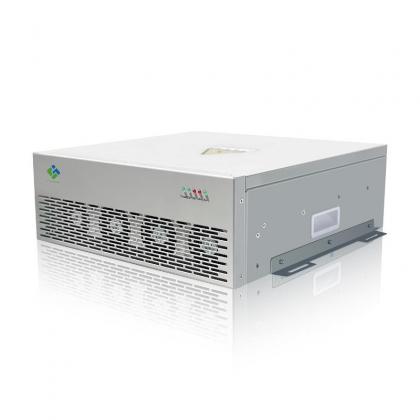
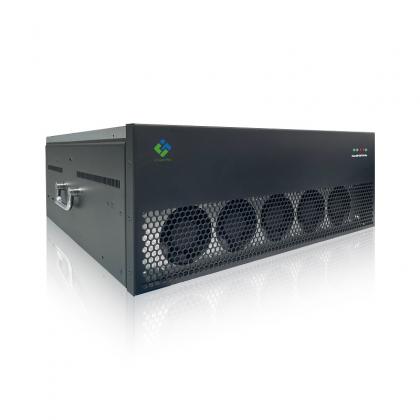
Le Générateur de variables statiques SVG Ce système utilise les principes de l'onduleur de tension. Il emploie des IGBT pour contrôler l'amplitude et la phase de la tension alternative de l'onduleur. Ceci génère des courants de compensation réactive inversés qui s'annulent avec les courants réactifs du réseau, assurant ainsi une compensation efficace de la puissance réactive.
Grâce à la commutation des IGBT à des dizaines de kHz, les systèmes SVG peuvent compenser rapidement les charges réactives en 5 ms ou moins.
Ils maintiennent une précision élevée de 99 % ou plus.
2. Plan de déploiement : Échantillonnage haute pression avec compensation basse pression 1
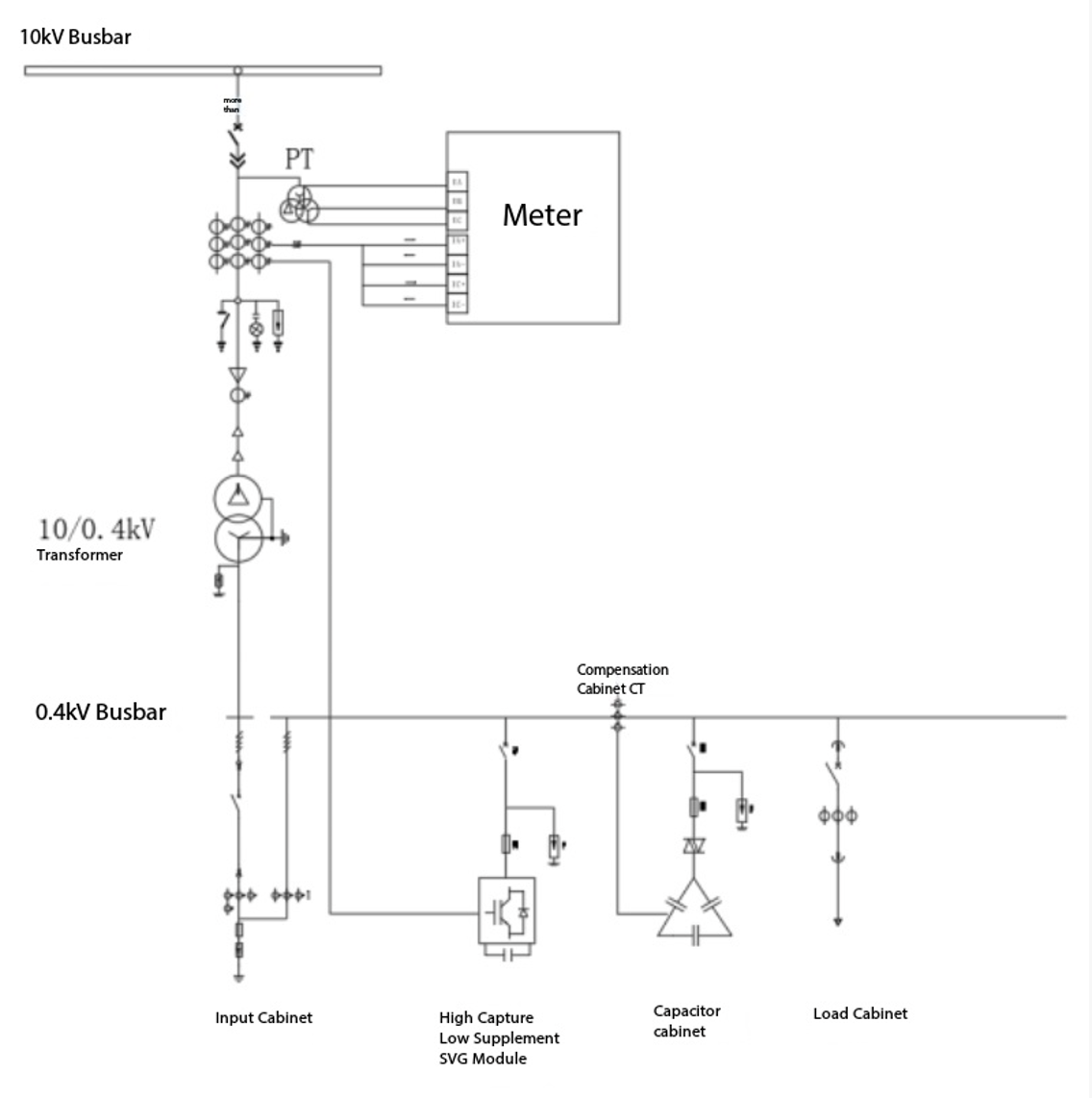
Lors de la compensation de puissance réactive sur les sites photovoltaïques, celle-ci doit être effectuée côté basse tension. Il est également important de prendre en compte la puissance réactive générée par les transformateurs et les câbles haute tension. La gestion de la puissance réactive résiduelle côté haute tension est essentielle. Cela nécessite des mesures d'échantillonnage côté haute tension. Les ingénieurs utilisent principalement deux méthodes d'échantillonnage : l'échantillonnage direct du courant côté haute tension et l'échantillonnage par compteur multifonction. Échantillonnage direct du courant côté haute tension : prélevez directement le courant côté haute tension. Définissez l'angle de phase tension-courant à l'aide du modèle de transformateur. Calculez la puissance réactive côté haute tension. Appliquez ensuite la compensation de puissance réactive côté basse tension. Le schéma est présenté ci-dessous :
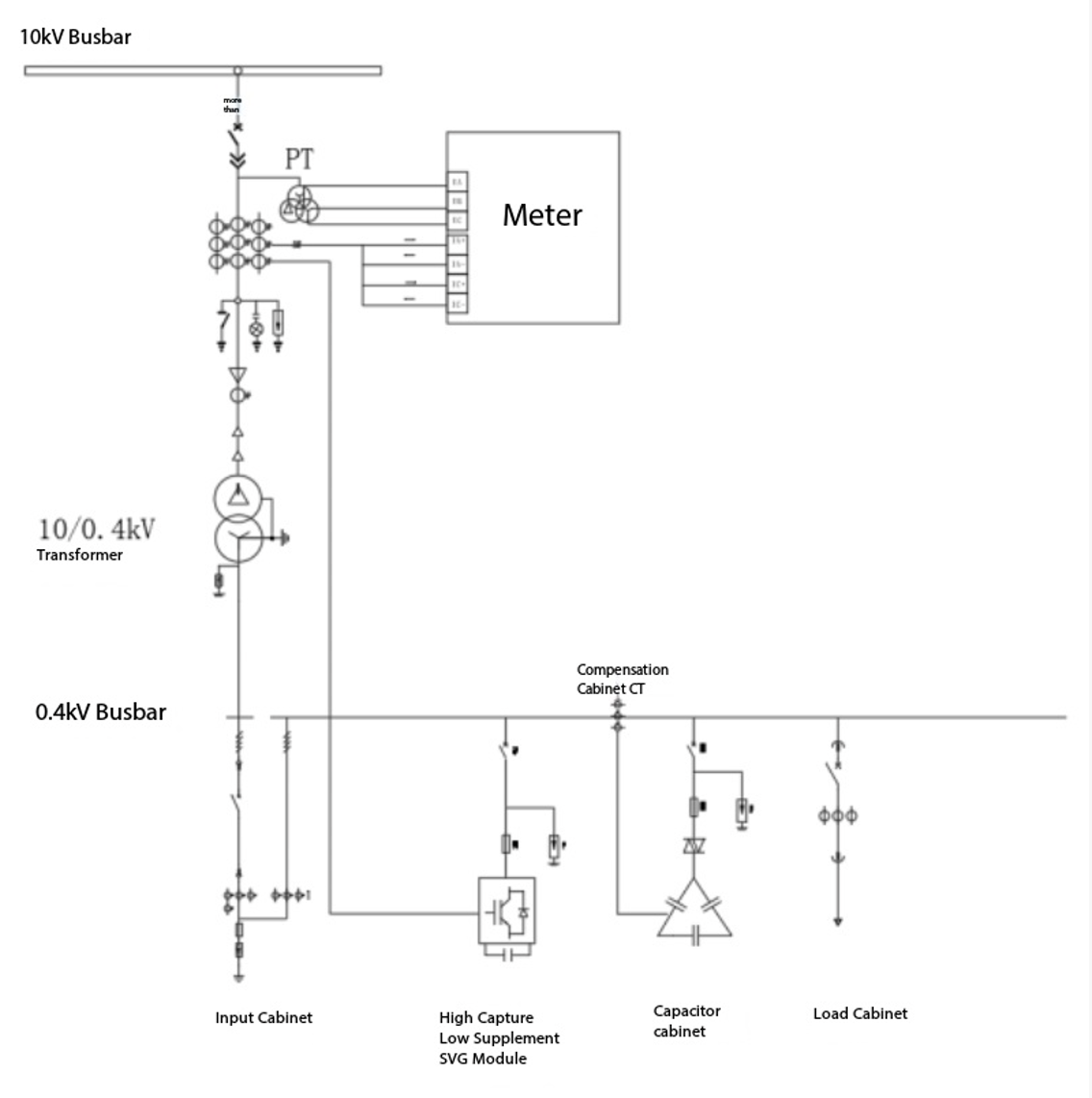
Échantillonnage par compteur multifonctionnel : Installez un compteur multifonctionnel côté haute tension. Il échantillonne les signaux de tension et de courant secondaires, puis calcule la puissance réactive.
Le système transmet la puissance réactive calculée via RS485 au générateur statique de puissance réactive SVG pour compensation. Le schéma est présenté ci-dessous :
3. Choix de l'installation : Configuration flexible avec synergie entre les systèmes nouveaux et anciens
Le modèle « Forte production, faible compensation » est compatible avec les systèmes de compensation existants sur site. Sa capacité est principalement déterminée par la puissance réactive résiduelle côté haute tension.
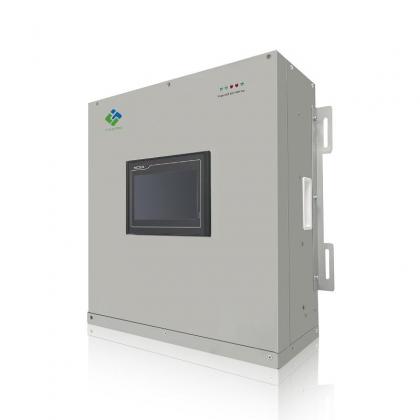
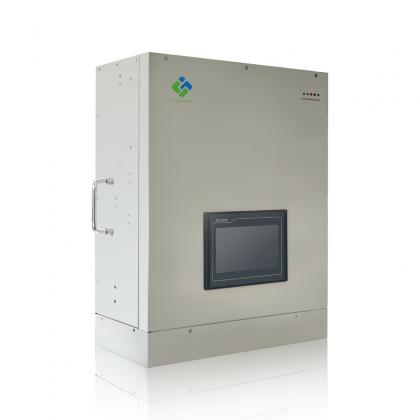
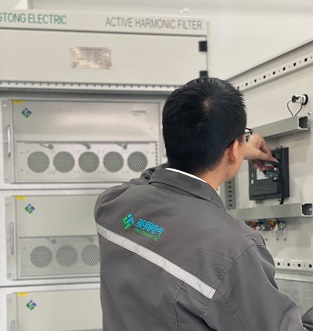
L'appareil offre des options d'installation flexibles, notamment des configurations murales, en armoire et conteneurisées pour l'extérieur, s'adaptant ainsi à diverses conditions sur le terrain.
Lors de l'installation, vérifiez que le courant de compensation du système « High Harvest Low Compensation » n'affecte pas l'échantillonnage.
Veillez à ce que cela n'interfère pas avec l'échantillonnage par les dispositifs de compensation existants. Cela permet de maintenir leur fonctionnement normal.
Cette approche permet à l'unité « High Harvest Low Compensation » de fournir une compensation de puissance réactive résiduelle, permettant une compensation de puissance réactive de haute précision à moindre coût.
IV. Résultats de l'application
Shanghai New Energy Technology Co., Ltd. est un fournisseur de services énergétiques doté d'une vaste expertise. Spécialisée dans la rénovation énergétique, l'ingénierie électrique et la production d'énergie propre, elle accompagne également l'intégration multi-énergies et le développement de micro-réseaux. Suite à l'installation de systèmes photovoltaïques dans une usine de Xi'an, le facteur de puissance du site a chuté brutalement, entraînant des pénalités sur la facture d'électricité, atteignant jusqu'à plus de 10 000 yuans par mois.
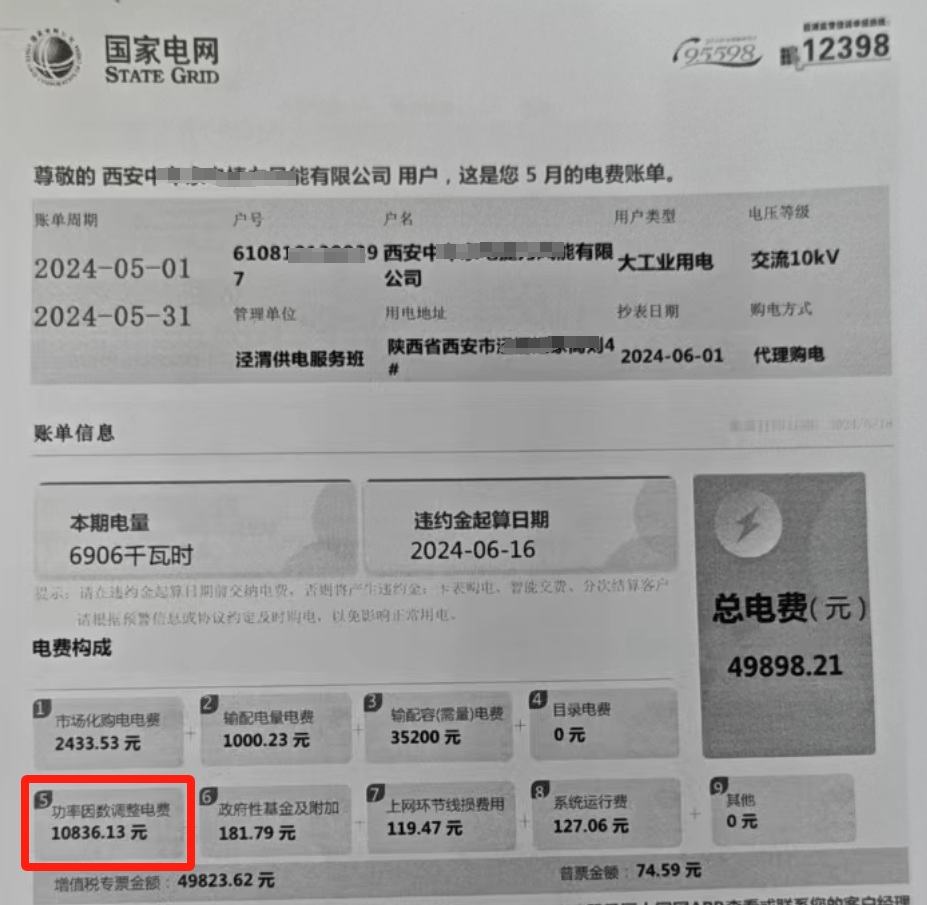
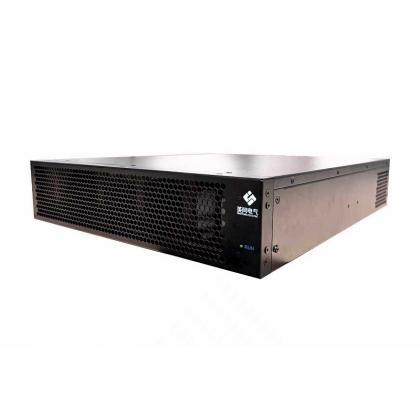
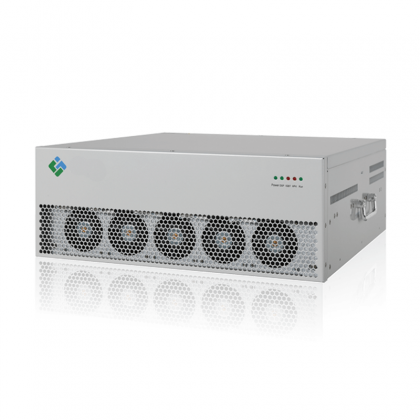
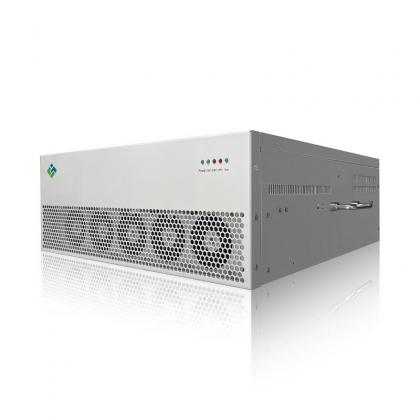
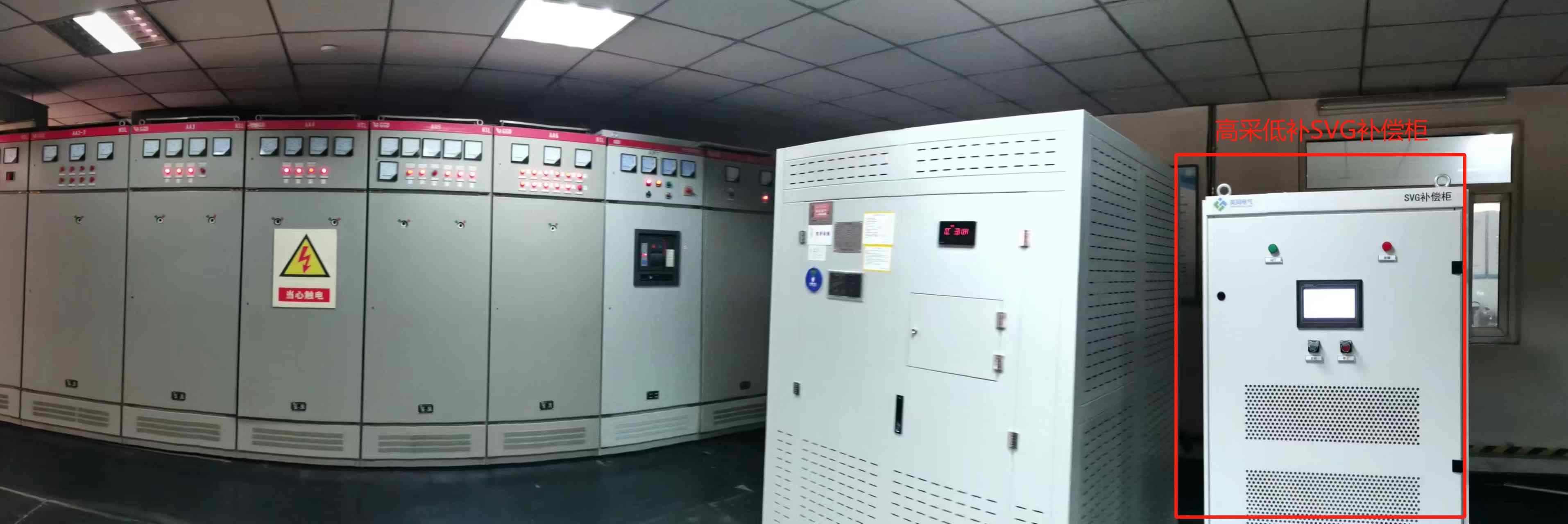
Pour résoudre les problèmes de pénalités de consommation d'électricité, le site a utilisé une solution de « forte production, faible compensation ». Il a installé un Dispositif de compensation de puissance réactive SVG de 200 kVAr Le dispositif compense la puissance réactive côté haute tension. Après l'intervention, le facteur de puissance s'est nettement amélioré et le site n'a plus subi de pénalités de consommation électrique.
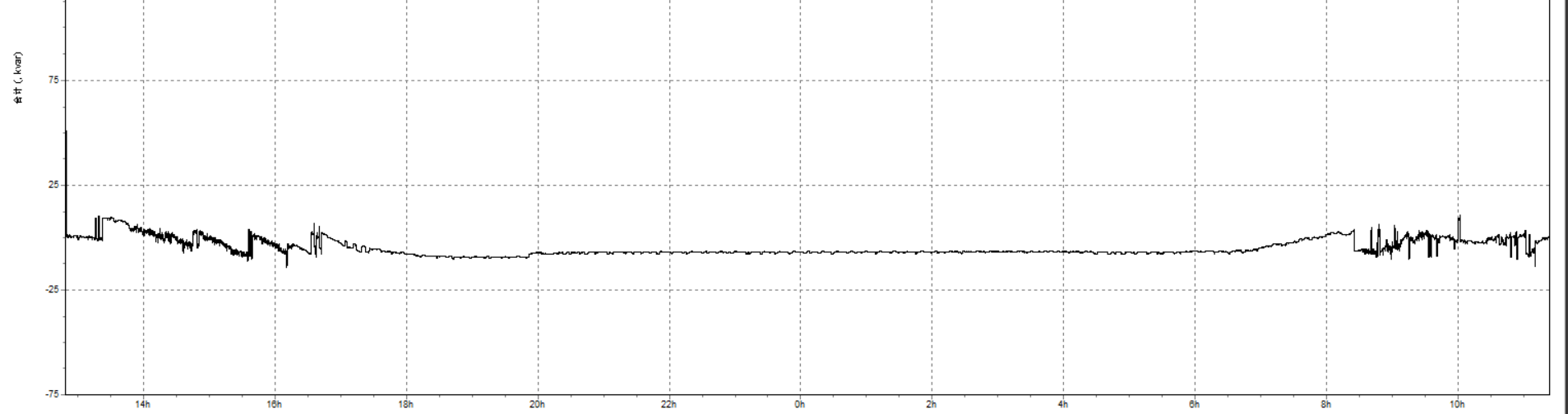
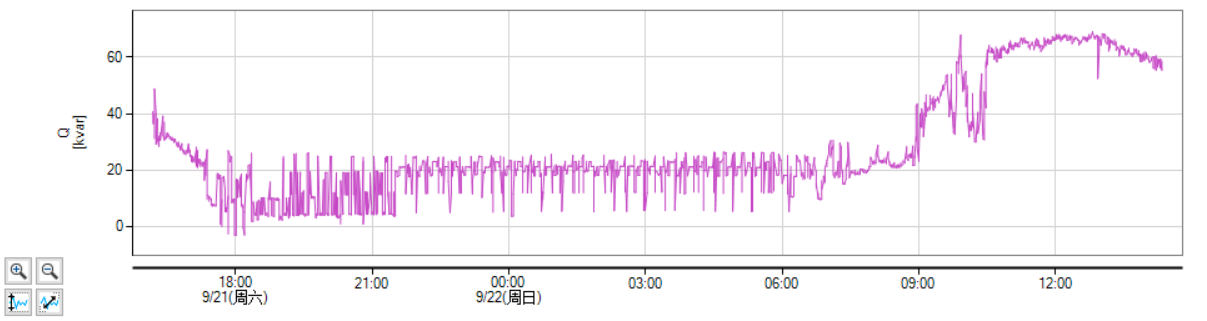
Les données de mesure haute tension montrent que la puissance réactive est restée proche de 20 kvar la nuit avant le traitement. Elle a dépassé 60 kvar pendant la journée sur les systèmes haute tension du site.
Après traitement, la puissance réactive a diminué de manière significative, restant stable à environ 0 kvar pendant la plupart des périodes de fonctionnement.
Puissance réactive côté haute tension avant régulation
Puissance réactive côté haute tension après régulation
2. Amélioration significative du facteur de puissance
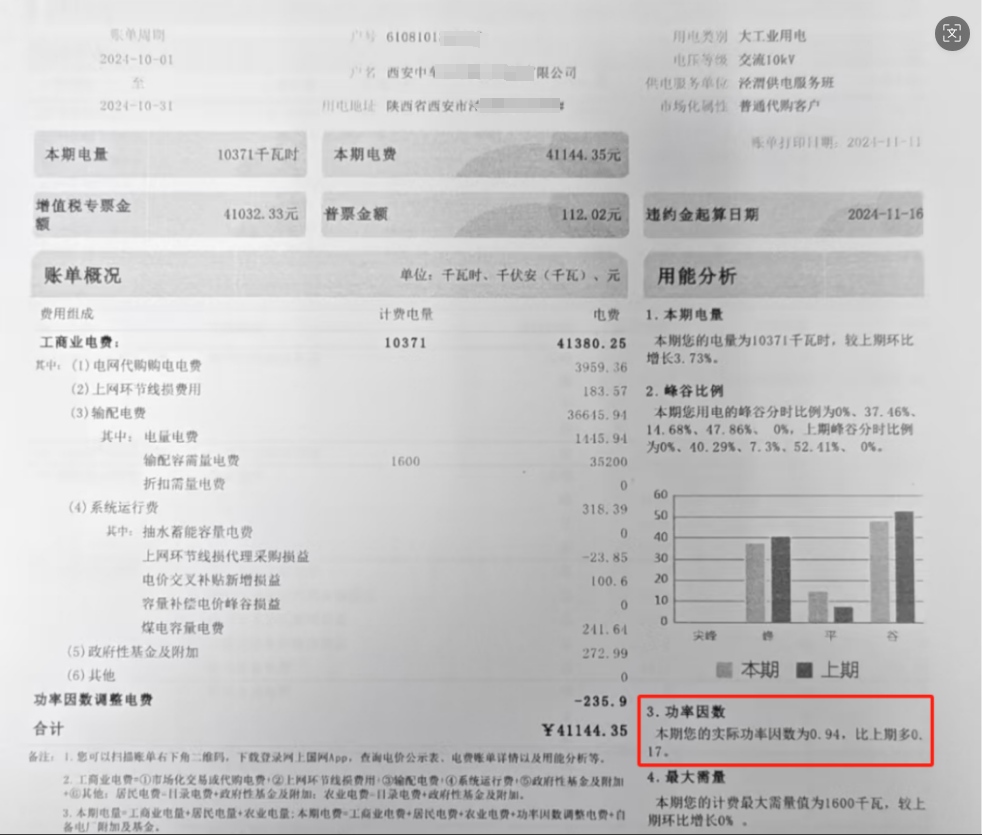
Après la mise en œuvre des mesures correctives, le facteur de puissance sur site s'est amélioré. Il est passé de 0,77 à 0,94 sur la facture d'électricité de l'utilisateur. Ce dernier a ainsi non seulement évité les pénalités, mais a également bénéficié d'une réduction sur sa facture d'électricité.
V. Résumé de l'étude de cas et valeur de promotion
Le système de puissance réactive à extraction élevée et à faible compensation est désormais la solution privilégiée. Il résout les problèmes de faible facteur de puissance, qui surviennent après le raccordement des systèmes photovoltaïques au réseau. Ce système repose sur un appariement précis et une régulation efficace. Adaptée aux caractéristiques de fonctionnement des réseaux après leur intégration, cette approche utilise des stratégies différenciées de collecte de données et de compensation. En détectant avec précision les déficits de puissance réactive et les variations de charge, elle permet un ajustement ciblé et dynamique de la puissance réactive. Ceci compense rapidement les pertes et améliore progressivement le rendement global du facteur de puissance, garantissant ainsi le respect continu des règles en la matière. Ce système contribue à prévenir les amendes pour non-conformité et à réduire les coûts d'exploitation pour les utilisateurs.
Cette solution optimise la rentabilité des projets de production d'énergie photovoltaïque. Elle offre une compatibilité et une synergie exceptionnelles avec les systèmes de production d'énergie photovoltaïque. Elle permet une intégration fluide et un fonctionnement synchronisé sans modification majeure des équipements photovoltaïques existants. Elle présente de nombreux avantages : installation facile, performances stables, maintenance simplifiée, coûts d'investissement maîtrisés et économies d'énergie substantielles.
D'une part, cette solution optimise la qualité de l'énergie du réseau en réduisant les pertes de puissance réactive sur les lignes et en améliorant l'efficacité du transport, garantissant ainsi une alimentation électrique photovoltaïque stable. D'autre part, elle permet aux utilisateurs de réduire leurs risques financiers et d'accroître la rentabilité de leurs projets photovoltaïques. Elle concilie les avantages économiques pour les utilisateurs et la stabilité du réseau. Cette approche offre ainsi une solution gagnant-gagnant pour la production d'énergie verte et une consommation d'électricité conforme aux normes.



 réseau ipv6 pris en charge